Kelly Brakenhoff Discusses Her Latest Cassandra Sato Mystery and Her Favorite Writing Advice
Having spent considerable time dealing with intrigue and warring faculty on college campuses, I’ve never been able to resist mysteries set in academia, like those penned by Kelly Brakenhoff. I loved learning about Kelly’s latest release, her career and children’s writing as an ASL interpreter, and her favorite writing advice.
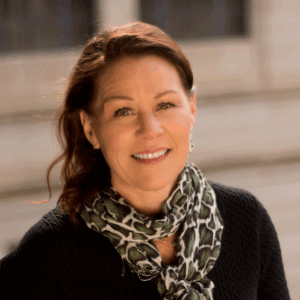 First off, congratulations on the publication of HOMECOMING HOMICIDE, the fifth book in your Cassandra Sato Mysteries. Can you share with our readers a bit about HOMECOMING HOMICIDE and the series as a whole?
Thank you! It’s been a fun ride. The Cassandra Sato Mysteries are cozy academic whodunits where small college meets big secrets. Cassandra is a Hawaiian-born college administrator who moves to rural Nebraska for her dream job only to discover her “other duties as assigned” include wrangling faculty feuds, student protests, and the occasional corpse. Think Only Murders in the Building if it were set at a Midwestern college, with less podcasting and more paperwork.
In Homecoming Homicide, book five, Cassandra heads back to Hawaii expecting leis, sunshine, and family time. Instead, her homecoming begins with a century-old murder, buried family secrets, and a very opinionated parrot. It’s Knives Out meets Moana—with better snacks and way more paperwork.
I’d love to know more about the background and personality of your protagonist, Cassandra Soto.
Cassandra Sato is a Hawaiian-born, Japanese American college administrator who traded palm trees for cornfields and still isn’t sure why. She’s ambitious, disciplined, and always has a warm travel mug glued to her hand (Nebraska winters demand it). On the surface she’s polished and professional, but privately she’s witty, pop-culture fluent, and occasionally the star of what her students call “Queen of Doom” moments (those times when life turns into a slapstick comedy in spite of her meticulous planning). She can quote Harry Potter in one breath, wrangle faculty egos in the next, and still make time to train her reluctant foster dog, Murphy.
A related question: How has Cassandra grown and changed during the series? 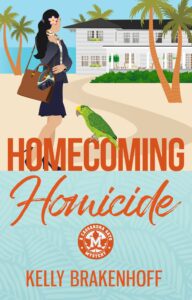
When readers first meet Cassandra, she’s an overachiever with color-coded calendars and a five-year plan to become a university president. She keeps her grief and vulnerability tucked neatly behind her professional armor. Over the series, though, her carefully curated life keeps colliding with chaos: snowstorms, sword fights, student protests, and a dog who refuses to be housebroken. Each disaster cracks her shell a little wider. By Homecoming Homicide, she’s still ambitious and driven, but she’s also more willing to lean on friends, laugh at herself, and even face the possibility that her one great love might not have been her last.
What led to your decision to set the series on a college campus? 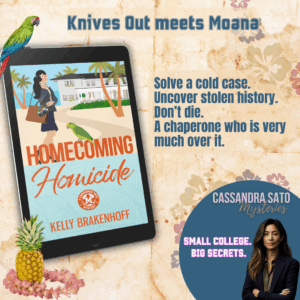
I’ve been an ASL interpreter in higher ed for decades, which basically means I’ve had a backstage pass to academic life. I’ve sat through lectures in everything from anthropology to chemistry to “death and dying.” Professors can be both brilliant and utterly ridiculous, sometimes in the same class period. Add faculty meetings full of power plays, student protests that snowball overnight, and Nebraska weather that can take you from flip-flops to frostbite in the same week…well, that’s a mystery writer’s dream playground.
Colleges are like small towns: gossip spreads faster than Wi-Fi, everyone knows everyone’s business, and egos can clash in spectacular ways. Some of the most jaw-dropping dialogue in my books are direct quotes I’ve overheard in real life. Academia may look buttoned-up from the outside, but often it’s chaos wrapped in tweed, which makes it the perfect setting for shenanigans, mayhem, and… murder.
You’re a longtime ASL interpreter with a passion for deaf culture and building connections between deaf and hearing folks. Can you share with our readers what led to your calling to do this work?
It all started by accident, really. The summer before my sophomore year of high school, my parents stuck me at a camp for Deaf kids where my dad worked. I was the only hearing kid there, armed with about 50 signs and a whole lot of FOMO. By the end of the first week, I decided I wasn’t content being a bystander. I wanted to learn their language and be part of the conversation.
That decision changed everything. What began as teenage curiosity grew into a 30+ year career bridging Deaf and hearing communities. I majored in English in college, thinking I’d end up in corporate communications, but my Deaf friends and mentors encouraged me to pursue interpreting. It turned out that being a word nerd was actually the perfect foundation for working between two languages.
Over the years, I’ve sat in classrooms for nineteen different majors, interpreted everything from job interviews to funerals, and witnessed both heartbreaking and hilarious moments. Interpreters live in this unique space between two worlds. We’re not telling our own stories, but we carry them with us, and they change us.
For me, the heart of it all is connection. ASL is communication, belonging, culture, joy. My mission, whether through interpreting or through my books, is to amplify Deaf voices and help more people see the beauty and richness of this community that has given me so much.
You’re also the author of an award-winning children’s book series featuring DUKE THE DEAF DOG. What have you found to be the similarities and differences between writing for children versus writing for adults? And which do you find more challenging?
My Duke the Deaf Dog books are playful, short, and educational, helping children (and their parents) learn about Deaf culture and ASL in a fun, approachable way. Every word has to pull its weight, since picture books top out around 400 words. Squeezing character, plot, and emotion into such a tiny space is like cramming a five-course meal into a lunchbox.
My mysteries run closer to 60,000 words. That gives me room for satire, snark, and red herrings but it also means keeping cozy readers (who are very sharp!) guessing until the end. Every clue has to be carefully planted, every suspect believable, or readers will spot the killer too soon.
Both are equally tough in different ways. With kids’ books, every word counts. With mysteries, every clue counts. What ties them together for me is that I love stories where good triumphs over evil, the bad guys get what they deserve, and the underdog wins, whether that’s a Deaf second grader learning to shine or Cassandra Sato untangling academic mayhem.
Are there particular authors who have inspired your writing journey?
As a kid, I tore through Nancy Drew and The Hardy Boys, then graduated to epic fantasy like The Lord of the Rings and The Chronicles of Narnia. Somewhere between elves and enchanted wardrobes, I fell in love with the idea of ordinary people thrust into extraordinary adventures.
Today, my mystery influences are a mix of legends and contemporaries. Sue Grafton showed me how a sharp PI like Kinsey Millhone could be both tough and relatable (and yes, I fully subscribe to Kinsey’s stretchy black dress philosophy). Agatha Christie is, of course, the OG. We’re all borrowing from her brilliance in one way or another. And I can’t count the number of times I’ve laughed out loud reading one of Janet Evanovich’s Stephanie Plum novels. Someday, I aspire to be that silly on purpose.
More recent inspirations include cozy mystery writers like Tonya Kappes, Stella Bixby, and Eryn Scott, who bring humor and heart to contemporary settings. And honestly, my 25-year-old book club keeps me on my toes. We read across every genre, and those unexpected picks often become my favorites.
Writers are readers first. I read mysteries to dissect how the authors pull off their twists, and thrillers to spark ideas for more action in my own books. But if I get so lost in a story that I stop analyzing altogether I know I’m enjoying an excellent book.
What’s the best piece of writing advice that you ever received?
Whoa, how much time do you have? Okay I will narrow it down to several:
Don’t wait for permission. I spent years dreaming of traditional publishing before realizing life’s too short to let gatekeepers decide if my stories deserve readers. Indie publishing gave me the freedom to write what I love, represent Deaf culture authentically, and connect directly with readers.
Another piece that stuck with me: lean into your strengths. We all have different superpowers. Mine are communication, positivity, and always striving to improve. When you play to what you’re naturally good at, the writing journey feels more sustainable (thank you, Becca Syme and her Dear Writer series for helping me see that).
On the craft side, I’ve learned to obsess over my opening chapters. Get into the action, introduce characters right away, and make readers care. I rewrite those first pages ten or twenty times for all my books in both genres.
Finally, beware the research rabbit hole. With all the online courses, podcasts, and social media tips out there, it’s easy to spend hours “learning” instead of writing. Pick the resources that fit your style, focus on today’s needs, and then get back to the page. Because at the end of the day, the best advice is simple: write the story.
What’s next for you writing-wise?
I’ve got more Cassandra Sato mysteries on the way. Book 6 takes students on a study abroad to France, where there’s a kidnapping plot. I want to expand the Duke the Deaf Dog series with four more chapter books plus classroom resources to help teachers bring ASL into their lessons.
Beyond that, I’d love to host writing contests for Deaf and hard-of-hearing students and maybe mentor aspiring Deaf authors. A spinoff mystery series is simmering in the back of my mind too. My biggest problem isn’t ideas, it’s hours in the day.
When I started, I thought of writing as a part-time job I’d grow into when I retired. What I didn’t realize was how much work (and joy) comes with this career. The journey has been longer and harder than I expected, but also so much richer because of the incredible readers and author friends I’ve met along the way. I just want to keep learning, keep writing, and keep building connections, one book, one story, one reader at a time.
Anything else that you’d like to add, or wish that I’d asked you, but I didn’t?
Readers sometimes tell me they come for the mystery but stay for the messy coworkers, quirky students, and glimpses into Deaf culture. I hope my stories are fun escapes but also teach something along the way.
And since I’m the rare extroverted author, I don’t just want people to read my books and vanish. I love talking with readers about mysteries, about Deaf culture, or just about what’s on their TBR pile. So if you spot me on Facebook, Goodreads, BookBub, Amazon, or wherever you like to hang out online, say hi. Some of my favorite surprises are photos from readers enjoying my books at the beach or in the bleachers at their kid’s softball game. Getting to connect with people who love stories as much as I do is the best part of this author journey.
BIO:
Kelly Brakenhoff is the author of 16 books and a seasoned ASL interpreter. In 2025, two of her books were named to the CBC Favorites Award Lists by teachers and librarians nationwide. When she’s not writing cozy mysteries or dreaming up adventures for Duke the Deaf Dog, she’s likely spoiling her grandkids or her dog.
BUY/CONTACT LINKS:
Amazon link: https://www.amazon.com/dp/B0F1DB5KW6
Series page: https://kellybrakenhoff.com/plain/cassandra-sato-series/
Audiobooks are all available on Libby and Hoopla, as well as Audible, Spotify, and Chirp.
Webstore: https://kellybrakenhoff.com/shop/
If people want a free cookbook and short story they can opt in to my newsletter that comes twice a month:
Loved learning more about Kelly’s two series! The questions you asked are always insightful, Lynn, and Kelly ‘s answers send me out to pick up her books 📚. Thank you for sharing!
Thanks so much, Beth! It was really fun to learn more about Kelly and all the good work she does!