ChatGPT: A Scammer’s Delight
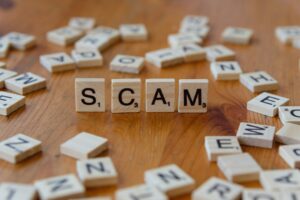
Photo by Marcus Winkler on Unsplash
A few weeks ago, slickly written, effusive pitches from “book marketing experts” began appearing with astonishing regularity in my inbox. Here’s a sample opening of one:
Hello Lynn,
What struck me most in Missing Mom is how you turned your own experience of loss into a novel that doesn’t just entertain but speaks directly to the ache of absence. Through Noelle’s search for truth and Savannah’s struggle for survival, you capture how love and resilience can live even in the shadow of grief. It’s a story that validates the longing many carry quietly, while offering the courage to keep moving forward.
The reason this matters now is powerful: families everywhere are navigating loss, fracture, and unanswered questions. Readers are reaching for books that show them how to hold on to love while walking through uncertainty. Your novel doesn’t minimize that pain, it honors it, while showing strength can grow from searching. 
At first, I was blown away! How flattering to receive this much praise for my work. Many of the messages seemed so personal, commenting not only on my work but my background. Reading them, I felt like Sally Fields at the Academy Awards all those years ago when she announced in astonishment: “You like me. You really like me.”
Of course, like most things that are too good to be true, these pitches are. We writers have the wonders of ChatGPT to thank for their proliferation. Even scammers who otherwise might find it challenging to write a complete sentence can plug in information about us and our work and go to town with smoothly believable pitches. I’m grateful to Author’s Guild, Sisters in Crime, and Writers Beware for their frank warnings about this latest scam.
And so, each day, I press the “delete” button and let go of the fantasy that some book “expert” on a white horse is coming to rescue my novels from the ever-growing bin of “good books that almost no one has ever read.”
Honestly? I feel incredibly angry. Isn’t it enough that our books have been pirated to be used as data for artificial intelligence? (Thank God for the Anthropic Settlement.) Here we have yet another way to screw us writers out of our meager earnings and charge us for services that are either non-existent or so paltry that there’s no way they’re going to move the needle on book sales.
We authors are such a vulnerable population. With thousands of books flooding the market daily, we want so desperately for the books we’ve spent months and years working on to find their way into the hands of readers. And scammers are remarkably good at preying on our hopes and dreams.
I keep wondering how these folks sleep at night.
I sure wish they’d leave us writers alone!
We strike back by shining sunlight on the problem, like you did so honestly here, Lynn. Thank you.
What a great way to frame this, Pam- “shining sunlight on the problem”– Thank you!
Well said, Lynn!
Thanks so much, Joan!
I had to laugh when I read this. Years ago (1990) I published a book with Scholastic and in 1919 I self-published an Amazon Short Single, and out of the blue, I started getting those flattering emails laced with praise. Now I know what’s behind them. Thanks for the heads up.