Intriguing Mysteries and More: Pat Arneson’s Maguire Mystery Series Offers Hope and Healing
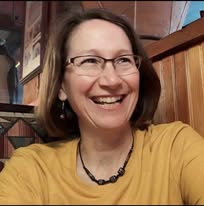 A big part of the joy of interviewing authors is learning about the fascinating backgrounds they bring to their work. Pat Arneson is a clinical therapist who is also a certified equine-assisted therapist. She draws upon her rich background to pen her novels:
Congratulations on the release this past year of not one but two books in your Maguire Mystery Series, SIMPLY DEAD and THE EMPTY DARK. Can you share with our readers a bit about the series and what inspired it?
Thank you! An exciting year, to be sure. SIMPLY DEAD was actually finished a year and a half earlier. I learned about the publication process while working on THE EMPTY DARK, and the books were released seven months apart.
Abby Maguire, a clinical therapist, has worked for years in high-trauma settings. She’s burned out, has PTSD herself, and needs to take a step back. A three-month temp job at a horse ranch seems like just the thing—she knows nothing about horses or ranches, but a summer in the country sounds peaceful. 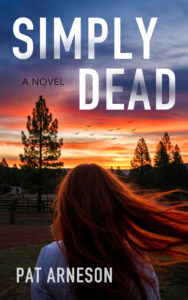
She finds herself surrounded by secrets and sabotage. Then she finds a dead body in the barn. Abby is headstrong and relentless and won’t stop until she knows the truth—even as danger closes in around her.
SIMPLY DEAD and its sequel, THE EMPTY DARK, are both mysteries with a strong sub-theme of hope and healing. As Abby grapples with murders, she helps others with real, straight-forward information about PTSD, anger, grief, loss, fear, and more. She helps people understand how to reclaim their lives, even as she chases killers.
I intentionally wrote these books to be conversation starters, and I find it fascinating that people engage with them on many different levels. Readers tell me they love the characters and feel they have made new friends. They talk about the plot twists and trying to figure out what was really happening. In part, these books are romps—fun, and funny. But some readers are hit at a much deeper level and find themselves talking about things they’ve never been able to before. Providing this vehicle—a way to talk about it—is my ulterior motive.
This will continue in future books. Abby and her friends will get in trouble, do outrageous things, risk terrible danger, and demand justice. They will also wrestle with pain and inner demons, and lead others to healing. Each book will have a different mental health focus woven through the plot. 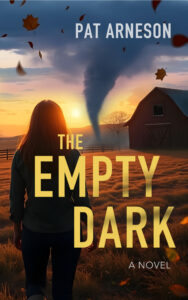
I was fascinated to learn that you are not only a clinical therapist but a certified equine-assisted therapist. How did you become interested in equine therapy, and have you found it very helpful for those who’ve experienced trauma?
Like Abby, I practiced as a licensed clinical therapist in high-trauma settings for decades. I had never heard of equine-assisted therapy, knew nothing about horses, and had no curiosity about horses. That changed after a work-related traumatic brain injury (TBI) ended my career and set me on a long road of rehabilitation.
Having lost equilibrium, balance, and physical and visual coordination, and struggling to tolerate light and noise, I began to grasp at things to stave off depression. One such activity was to see if I could ride a horse. I did not fall off, and I saw a sign in the barn advertising equine-assisted therapy for a wide variety of conditions, including TBI.
Initially terrified, I learned about horses by working with them for my own healing. When I saw first-hand what they do, I went on to become certified myself.
Horses are simply astonishing therapy partners. I have seen remarkable healing in people with treatment-resistant trauma, depression, anxiety and many other struggles. As prey animals, horses are incredibly sensitive to our emotional states—even those we try to hide, and even when we have become desensitized or numb to our own feelings. Horses will sense mood, intention, and shifts in energy or arousal, and will give little “tells” that something is happening. This can be used for reflection, exploration, reconnection with parts of ourselves we may have shut down, and learning to calm or control our own nervous systems.
There are countless other applications, in addition to trauma and mental health. Horses help with ADHD, self-confidence, relationships, and any number of other situations.
Your protagonist, Abby Maguire, is also a therapist who takes a job doing equine-assisted therapy. Your background obviously provides you with tremendous authenticity in portraying what she does career-wise. What are the similarities and differences between Abby and yourself in terms of personality?
Abby and I share a basic approach to therapy and working with people, in terms of guiding principles and professional ethics. We both tend to get stuck in our heads. She learned from me how to be an Anxious Overachieving Perfectionist, and to describe it as the entirely made-up AOP Syndrome, which we both do with clients.
Personally, Abby’s a lot more outrageous than I am. She can be extremely hot-headed, runs her mouth, and flies into things with a lack of restraint that gives me a lot of vicarious pleasure. She makes some terrible decisions that get her into a world of trouble, but she does it with an energy and freedom I can only dream about.
What led you to decide to write novels?
I have wanted to write novels since early childhood. I grew up surrounded by books of all kinds, in a family that highly valued reading, and I’ve always loved stories. This is what I always wanted to be when I grew up.
What steps did you take to develop your fiction writing skills?
I came to this rather late in life, as a post-TBI career change. With time to finally explore and develop a new skill, I bought a dozen or so books on how to write a book, and set about studying them. This is my general approach to life—I read books to understand everything. Then I go talk to people.
I found that there is an enormous amount of craft involved in writing a novel. It’s a very significant undertaking, and there’s a lot of conflicting opinion about every aspect of the entire process.
I also joined a few writers’ organizations, took some webinars, subscribed to some magazines, and learned a tremendous amount from other writers. Then I just had to start working out what was effective for me, and what was not. It’s a continuing process.
A related question: What advice would you give someone who aspires to write a novel?
Learn as much as you can, try things out, and see what fits. Stay open to new ideas, information and experiences. Learn to read with an eye to what each author does well, and study how they did it. No one will match your voice and your style completely, but if you pick up one technique or idea at a time, and incorporate them, you keep getting better.
Then write, and have fun with it. One of the most helpful lessons for me has been to get everything out in the first draft, without perfectionistic self-limitation. Then I have something to edit and revise, which is where the higher-quality product starts to take form.
What is your writing process like?
I’m an outliner. I plan out the basic plot and sub-plots, with scenes in order, noting when characters are introduced. Once I have that framework, I actually write the scenes all out of sequence, going with the inspiration of the day. The outline keeps me organized, so my timeline remains consistent.
In revision, I make graphs showing rising and falling tension levels, with plot twists and unexpected events arranged to manipulate the rhythm and energy of the work as a whole. If I move a scene to improve the flow of the story, I check and cross-check the character and plot specifics, so I don’t talk about someone before I’ve met them.
All of this being true, I also let my characters take over, taking their own roles and the storyline in directions I did not intend. This was my biggest surprise in the process—I didn’t believe it was a real thing for characters to break out on their own, but it sure is. I allow anything to change and be rewritten. I just re-do the outline accordingly.
What surprised you the most about becoming a published author?
I’m continually surprised by how much fun it is. I love talking with people about my stories and characters, and about research, and about future books. I’ve always been insatiably curious. If I tell people that I’m a writer, and I’m wondering about something, people will tell me anything. People love to tell their stories, and now I have a great excuse for asking.
I love meeting with book clubs and talking about books in general. I love it when people say my characters are like new friends they’ve made, and they want to hang out with them. I love the unpredictability of what people think about, and comment on. It’s just delightful.
What’s next for you writing-wise?
I’m currently working on the third book in the Maguire Mystery series, and I have some ideas for a fourth. After that, I may venture into another series with another set of characters, in another setting. My head is filled to overflowing with stories.
Anything else you’d like to add, or wish I’d asked that I didn’t?
I’m really excited and happy when people request that their libraries order my books—even if it potentially reduces sales. I grew up in libraries. I love libraries, and having people check out my books from libraries is phenomenal. I also encourage people to pass my books around to friends who aren’t going to buy a copy anyway. I donated a few copies of each book to a local law enforcement agency, so the first responders and dispatchers and corrections folks could read a murder mystery with PTSD healing, if they want to. Of course every author wants sales, but I also want readers, and I want the books to do their work in this world.
BIO:
Pat Arneson is an author, a storyteller, a licensed clinical therapist with decades of experience in high-trauma settings, a certified equine-assisted therapist, and an adventurer who advocates living great stories, big and small.
CONTACT LINKS:
https://www.facebook.com/profile.php?id=61572177377112
BUY LINKS:
https://www.bookshop.org/shop/patarneson
https://www.barnesandnoble.com/w/simply-dead-pat-arneson/1146961064
https://www.barnesandnoble.com/w/the-empty-dark-pat-arneson/1148117867?ean=9798992256222