Personal Experience & Thorough Research Enrich Beth Strauss’s TANGLED WEBS
Few things can match the excitement of publishing your first novel. And it’s such a delight to interview a debut author, especially one as thoughtful and hard-working as Beth Strauss. Her determination to pen a story rich in meaning and authenticity shines through her work.
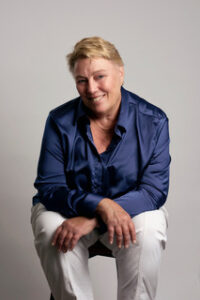 First off, congratulations on the release of your debut novel, TANGLED WEBS. Can you share with our readers a bit about the novel and what inspired it?
Thank you! The whole thing has been a bit mind-blowing!
Tangled Webs fits into the mystery/romance blend category. The story follows middle-aged, seasoned detective Karen Cappelletti in a small town outside Philadelphia. While working a homicide, she gets entangled in the cunning brilliance of a sociopath and must sift through a tangled web of lies to protect her town from a heartless killer and save herself from becoming the next victim. At the same time, her history of dysfunctional relationships and a raging emotional rollercoaster places her career and reputation on the line, forcing her to determine the price she is willing to pay to harness the love she has always longed for.
The main character was modeled after a campus police officer from UC Berkeley some forty years ago … yes, forty! I admired her strength and ability to work effortlessly in a male-dominated profession. Back then, I said, “I’m going to write a novel about this officer and make her a detective in Berkeley.” Back then, I had no clue how to do that. I also had zero for a plot.
Decades later, reflecting on my own previous experience with a sociopath, I had my “ah-ha” moment. The plot was born for that MC who had been sitting on a shelf collecting dust for forty years, and Tangled Webs came to life.
A related question: How does your protagonist grow and change during the course of the novel? 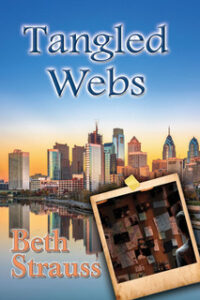
The protagonist starts with a long history of dysfunctional relationships and a romantic longing that keeps sending her into the arms of people who don’t quell her desires nor meet her definition of the relationship she has longed for. At the same time, she is very rule-driven and follows social protocol.
On the mystery side of the novel, she is tasked with understanding what drives a sociopath, something she has not dealt with. On the romance side, she is challenged with embracing authenticity instead of mindlessly following social norms. This is her biggest challenge and biggest opportunity for growth. If and how much she is willing to change will be revealed … but not by me, and not right here. 😊
I was fascinated to learn that you are a former oncology nurse. In what ways do you think your background in nursing has influenced and inspired your fiction writing?
In the world of oncology, you learn that life is precious…that we are never guaranteed time. Time to do what we love. Time to do what we have dreamed of.
That concept, alone, is what inspired me to take a chance…to follow a dream I’ve had throughout my entire adult life. Putting my work out there…public scrutiny…the “am I good enough.” The fears and challenges of taking a chance at following a dream of writing.
Cancer patients face uncertainty all the time. They face fear and the challenges of a disease that can permanently alter them. It was time for me to take inspiration from them and take on my own fears and challenges. Life is too short to allow those entities to hold you back. After watching so many wonderful and talented people lose their battle to cancer, I finally asked myself, “What are you waiting for?”
Knowing the devastation of cancer also pushed me to write stories that deal with real stuff…the hard stuff that some people read fiction to escape. Life is real. It’s messy. What better way to deal with life’s realities and complexities than to watch an MC conquer their fears and challenges…and succeed.
While you were at Harvard earning a master’s degree in journalism, you realized you preferred creative writing. Can you share with our readers what led to this realization?
When I began the program at Harvard, the first class I enrolled in was in June of 2020: News Reporting and Writing. In that class, we were tasked with covering events and writing up stories about those events. But…there were no events. The country was in a shutdown! I found the only “live” event in Philadelphia and covered it. A celebration of the centennial of women’s suffrage and the Justice Bell (that’s not a typo…the bell is a replica of the Liberty Bell).
I had a blast writing up the event, and then went on to write a feature piece on the history of women’s suffrage in Philadelphia, which was published in a local paper. I knew, at that point, I didn’t want to write hardcore news and be relegated to the “inverted pyramid” format. I wanted to write fun pieces…human interest pieces…stories that had a message…stories that moved people. I wanted to be more “creative” with my writing.
In the spring of 2021, I took my first elective: Creative Non-fiction. I was in a class with some amazing writers and learned about something brand new (to me) called a narrative arc. No joke. In class, someone was commenting on how my story had a great narrative arc. I had no idea what they were talking about, so I googled it…right then and there, while in class. Narrative arcs. Writing creatively. Manufacturing my own stories. I got the bug and knew I no longer wanted to be bound by the format of news writing or research articles.
From that point forward, I focused all my electives on creative writing. At one point, I even convinced the dean that a class on Suspense Writing was, indeed, a good class for journalists. All journalists should know how to keep their readers in suspense. Right? And she actually bought it and let me take the class…for credit!
Finally, after forty years of having a main character, complete with a name and personality, I found a plot for her and penned the first draft of my debut novel. And the inspiration came from that first creative writing class that taught me what a narrative arc was.
As you well know, academic writing and journalism are quite different from writing fiction. What steps did you take to develop your skills as a fiction writer?
You mean they’re not the same??? Honestly, at the time, I figured if I wrote in academia or wrote a news story, it can’t be that different. I was about to get a rude awakening.
After writing the first draft of my novel—which I thought was the best thing since sliced bread—I took a class called The Art of the Pitch. The intricacies of pitching your work. In that class, I learned that my story lacked so many key components, like a theme. I also didn’t know my story well enough to create a logline or a two-sentence pitch.
Back to the “skills”… Working in journalism and academia, I only read non-fiction. All my colleagues in the previously mentioned class read novels. I couldn’t even quote one novel that I had read. So, I did three things. The first led to the next two. First, I started reading novels in my genre. After the first ten pages, I knew my draft was anything but great. I had a “perfect” MC, (ie. no flaws). And the components of my homicide investigation were taken from episodes of Law and Order, etc. I had a lot of work to do and needed to develop that thing you asked me about: skills.
I mapped out two solutions: take novel writing classes and do the research to increase authenticity in my fictitious homicide investigation. I enrolled in as many creative writing courses as Harvard would allow and dove into novel writing classes through UCLA Extension. I learned the nuts and bolts of writing a novel—basic things like: drawing the reader in with the first paragraph, flawing my main character, determining my MC’s needs and wants, mapping out how she will grow and change, circling back to that thing called a narrative arc, determining the beats along that arc…and so, so much more.
I spent nine months with the draft tucked away, taking classes the entire time, while also reaching out to people doing real investigative work. Utilizing my journalism skills, I interviewed detectives, coroners, and pathologists. A year later, I had the tools and the research and wrote a second draft that looked nothing like the first. But I now had the skills to draw in my reader, layer my backstory, ensure that all my scenes moved the narrative arc forward, and make it all believable.
A related question: What advice would you give to someone who aspires to write a novel?
Befriend other writers: it’s a lonely and challenging world out there, and you will be tasked with promoting yourself and requesting reviews. It can be brutal, and people can be unkind. Create your creative community and find solace and advice from those people.
Take classes: You’re never too old to learn, and most creative writing classes are workshop-based, meaning other creatives will be reading your work and critiquing it. You will learn and grow tenfold.
Believe in yourself: Don’t let anyone tell you that you can’t be what you want to be. Don’t let anyone talk you out of your dreams.
Ask for help: Reach out to seasoned authors and ask them to help advise you and even promote you. Don’t be shy. We all need each other, and we’ve all been in the “new” category at some point.
Your novel has received such favorable reviews. Among other positives, reviewers have commented on the accuracy and authenticity of the investigation your protagonist undertakes. How did you go about researching what a police detective would actually do in the case of a homicide?
Great question. Interestingly, as I mentioned earlier, accuracy and authenticity were sorely missing from my first draft. A lot of time and hard work went into rectifying that, which is what brings me joy when I get those kinds of reviews.
So what did I do? After reaching out to friends—you know, the “do you happen to know a homicide investigator”—I dove into LinkedIn. Yup, LinkedIn helped me find the two investigators I leaned on (as well as a fabulous pathologist).
I reached out to them via email and explained that, out of respect for their profession, I want my fictitious investigator to be represented with accuracy. Not sure if that helped, but it was truthful, and they both got back to me.
And then, journalistic skills reared their head again. I began my interviews with open-ended questions, which allowed them to elaborate. I found this helped with the familiar “you don’t know what you don’t know” aspect. They told me things I wouldn’t have even thought about, let alone asked. They also shared stories that found their way into my work, further increasing authenticity.
From there, I had identified the elements of my story that I had no clue about, in terms of accuracy. Those led to very specific questions—specific to my plot and character’s journey.
And finally, I finished with a form of role play. For example, in my WIP, I have an interrogation scene, and I wanted to know exactly what that sounded like. So I set the stage and played the role of the suspect while my real-life investigator asked the questions that she would normally ask. She also gave me the rationale behind those questions.
What transpired was an MC that operated more realistically, and not like some action character out of a Hollywood film.
Do you foresee developing Karen’s story into a series?
100%. It wasn’t my initial thought, though.
While I was working on the first draft, I found myself really upset at the actions of two particular characters…mind you, I had created those characters and their actions. But I didn’t like how they were treating my MC, and I wanted revenge, plain and simple.
From that “revengeful desire,” a follow-up novel was born. It will be a standalone, as will the others that follow (I have solid ideas for novels 3 and 4), but they will all still be part of the Karen Cappelletti series.
I know you have varied writing interests. What’s next for you writing-wise?
As I previously mentioned, I plan to continue this first novel into a series. I also have two ideas for two different memoirs, although neither of them is a pressing need. The one that I really have a bug for is an idea that came from some of my historical research for a journalism story.
After diving into the archives and examining the Philadelphia women who were key to women’s suffrage, I happened upon a little-known side story between two of the women. Ideally, I’d like to be able to uncover enough archival information to create a historical non-fiction story. But, from what I’ve been able to uncover thus far, it will likely end up being historical fiction. That’s probably my biggest hoped-for project in the future.
Anything else you’d like to add, or wish I’d asked that I didn’t?
The only other thing I would mention is that my novel has an LGBTQ component. I’m hoping that doesn’t dissuade people from reading it. I’ve worked very hard at creating scenes that are universal to all. Issues of acceptance and inclusion, authenticity versus following others’ prescriptions, following your heart…I believe these are all universal issues. After all, love is love. Right?
BIO:
Beth Strauss, a recovering academician, freelance journalist, and oncology nurse, is the author of the debut novel, Tangled Webs. She first discovered her love for writing at the age of 12, while attending a children’s creative writing class. Her love of writing continued through her time in academia and recently in journalism, publishing stories in both local papers and academic journals. She went on to complete her Master’s degree in Journalism at Harvard, before realizing she preferred the freedom of creative writing over the regimented styles of academia and journalism. A native Californian, Beth eventually headed east to Philadelphia and now bounces between both coasts. When she is not writing, she enjoys pottery and photography, as well as taking hikes with her rescue pup, Maddie.
Buy Links:
Amazon: https://a.co/d/iOHCGPA
Direct from Publisher: https://www.bellabooks.com/product/9781642476941/
I enjoyed reading about you, your book, and the journey of getting Tangled Webs into publication. I never would have thought about cruising LinkedIn for helpful experts. Good idea! I appreciate that you included an LGBTQ component.
Wishing you, the book and the sequel to come a stellar 2026!
Thank you so much, Kathy. I hope you will take a chance on this novel and check it out. I’d love to hear your thoughts and feedback.
Wishing you a wonderful 2026, as well!
What an intriguing tale of growth, Beth and Lynn. It’s as if Beth was haunted by this character, and said character was haunted by a soulmate. That lands poetic for me ( ;
See below. That comment was for you, Pamela, and not the general “Comments”.
Well, it was Lynn who crafted such a spectacular interview!! Thank you for reading it, and I’m glad it resonated.
If you decide to check out the novel, please feel free to reach out with any comments or leave a review.