Lis Angus’s Fascination with “What Makes People Tick” Shines Through THAT OTHER FAMILY
I so identify with Lis Angus’s preoccupation with understanding people and why they do what they do! It was delightful to get to interview her again as she celebrates the release of her sophomore novel, THAT OTHER FAMILY:
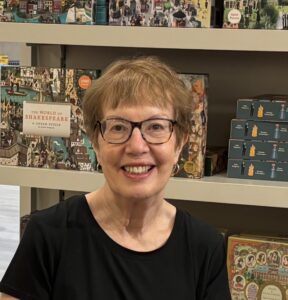 First off, congratulations on the release of THAT OTHER FAMILY. Can you share with our readers a bit about the novel and what inspired it?
The main character is Julie, a married mother of three teenagers, who’s shocked to learn that her late father had a double life, another family. When things escalate and her own family comes under attack, she has to fight to keep her children safe, while not knowing who to trust.
I’ve always loved stories where ordinary people are confronted with dangerous and challenging situations. I’m intrigued by the power of “secrets coming to light.” There was a true story some years ago, when a former mayor of Toronto was discovered to have had a secret second family. It was shocking at the time, though the outcome wasn’t nearly as dramatic as in my novel.
Your first suspense novel, NOT YOUR CHILD, received such positive reviews and recognition. Did you find that all of these accolades made writing your second novel easier or more difficult?
I was happy with the reception of my first novel, and the positive feedback from readers did boost my confidence. But I don’t think that made writing this second novel any easier, other than maybe giving me a lift when I was struggling with revisions and wondering whether I could write anything worthwhile — the “impostor syndrome” that I think most writers succumb to from time to time!
I know that your background includes working with children and families in crisis. In what ways has that influenced your attraction to domestic suspense? 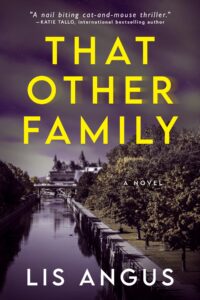
I think both were influenced by a third factor. From early on I had an interest in people, in what makes them tick and how do they interact. That led me to study psychology at university and to pursue work in that field. It’s also why I have always enjoyed reading suspense and psychological thrillers. So when I decided to write a novel, I was naturally drawn to the kind of story where relationship-based conflicts drive the action.
Can you tell us a bit about your writing process? Are you more of a pantser, a planner, or somewhere in-between?
I go back and forth. I’m definitely not a true “pantser” — I can’t just sit down and start a story and carry on from there. When I’ve tried, I run into dead ends and have to start over. I have to know where I’m going in a story, so I need an outline. But my outlines are more a work in progress than a guide. As the story develops and the characters come to life, new aspects appear. I end up throwing out story lines that weren’t working and adding new ones. The final shape of the story isn’t clear to me until relatively late in the process.
Some authors have shared that they begin with ideas about plot, and others start with character. What has been your experience?
I find it’s an iteration. Both my novels started with an image — a scene that popped into my head and captured me. Then I had to figure out the context: what would lead a character to behave that way, what led up to it and what would happen next? How would other characters react? So I go back and forth between plot and character.
When I interviewed you earlier about NOT YOUR CHILD, you mentioned that you did a lot of reworking and revision. Was that also the case for THAT OTHER FAMILY?
It’s been said that “all writing is rewriting,” which I agree with. A first draft just gets the story down, and in my case it’s not even yet the full story. It’s in the reworking that the complexities of plot and character emerge.
I’ve heard other authors say that it never gets easier, that every book is its own challenge, and I think that’s true. In writing my first book I learned a lot about structuring a novel, developing characters, ratcheting up suspense. But that increased my own expectations of my writing, so I had new standards I wanted to meet.
Contemporary authors have a variety of paths to publication, ranging from self-publishing to publishing with a small press to seeking an agent and hoping for a contract with a major publishing house. What path did you choose, and why?
When I started my first novel, I knew very little about the publishing industry. But everyone dreams of being published by a major publisher, right? I learned that in that case I’d need an agent: those publishers generally don’t accept manuscripts direct from authors. So after finishing the novel I spent quite a lot of time querying agents. A few asked to read my full manuscript, but ultimately none of them offered to represent me, and I had to figure out what to do next. Self-publishing was already becoming more accepted as an alternate path, but I wanted the validation of someone else saying “this is worth publishing.” So I started querying small presses, those who were willing to consider unagented manuscripts, and ultimately one offered me a contract
When I finished That Other Family, I again probed for an agent, but only for a short while, instead once again ending up with a small press. Like with any decision, there are pros and cons. Having a publisher means that they handle all the production aspects that I’d have to do if I self-published. But once the book is out, it’s not much different from self-publishing: marketing is mostly my job, and most of my book sales are online rather than through bookstores.
What has surprised you the most about becoming a published author?
Well, everything was new to me, so it was all a surprise. Promoting my books, getting exposure on social media, connecting with readers and other authors, learning about the industry. I don’t think it had occurred to me how much time I’d be spending on non-writing tasks.
What’s next for you writing-wise?
I’ve started work on a third novel, though I’m still in the figuring-it-out stage. Promotion for That Other Family has somewhat interrupted my writing at the moment. I’m also playing around with ideas for a short story.
Anything else you’d like to add, or wish I’d asked that I didn’t?
I have a monthly newsletter where I share writing news and other updates. Readers can sign up at https://lisangus.com/sign-up. I have a bonus for new subscribers, a free download with “outtakes” from That Other Family: scenes that didn’t make it into the final version, but give a flavor of the characters and story. And That Other Family has its own Facebook page, where I post reviews and other book news as it comes in. https://www.facebook.com/profile.php?id=61582944595750
BIO –
Lis Angus is a Canadian suspense writer living in a small town south of Ottawa. Originally from Alberta, she has also lived in Germany and Toronto. Before turning to fiction, she worked with children and families in crisis, and later as a business writer, conference organizer, and policy advisor. Her debut novel, Not Your Child, was a finalist for the 2021 Daphne du Maurier Award and was published in 2022. That Other Family is her second novel. Lis is a member of Sisters in Crime, International Thriller Writers, Crime Writers of Canada, and Capital Crime Writers.
BUY LINK – https://books2read.com/thatotherfamily
I always learn from your interviews, Lynn. You chose another interesting author for your latest interview. Thank you to you and Lis Angus for thoughtful questions and answers.
Thanks so much, Beth! I love interviewing authors and learning about their journeys and their writing. It’s been so rewarding!