Debut Author Susan B. Nolen Talks About the Importance of “Social Context” for Character Development
Having published my first novel at 65, I have a soft spot for debut authors who publish their first novels later in life, and who draw upon their professional backgrounds to enrich their fiction. So, it was a special pleasure to interview Susan B. Nolen!
First off, congratulations on the release of your debut novel, AN UNCERTAIN AGE. Can you share with our readers a bit about the novel and what inspired it?
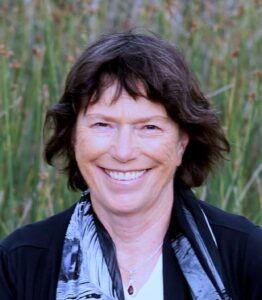 Thanks, Lynn! An Uncertain Age is set in County Durham (northern England) in the year following the Black Death – an age of great uncertainty, but also opportunity. My main character Margaret Surteys’s husband borrows money to expand their ale-brewing operation, then suddenly dies. Despite her advanced age and the opposition of powerful village men, she takes over the business herself, seizing a medieval woman’s only chance for independence. But there are great risks: if she fails, she’ll forfeit everything to her overlord, the Prince-Bishop. Margaret is aided and exasperated by 11-year-old Agnes, her abandoned step-granddaughter, who has plans of her own. Of course, they run into problems: mysterious disasters, suspicious deaths, danger and disappearance.
I know many of our readers will be inspired by the fact that you are publishing your first novel at age 71. How does it feel to be embarking on a whole new career at an age where many folks feel that they’re done working?
It’s amazing! I’d started to experiment with fiction while I was still working, but I just couldn’t write in both the academic and fiction worlds at the same time. When I retired at almost-65, I finally had the time to devote to learning a whole new way to write. Doing this in retirement is different that trying to build a long career as a novelist. For me, it’s a career in terms of the time investment, but not in terms of the external pressure to succeed. That’s all self-inflicted.
A related question: What led you to make the jump from a successful career in academia as a psychologist to focusing on writing fiction? 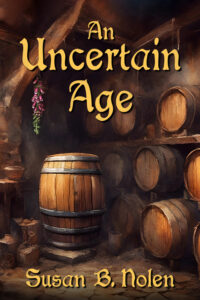
Although I’m trained as a psychologist, most of my research used ethnographic methods, observing people as they interacted in natural settings. Then I had to analyze all of that interaction and present it, not just in numbers, but in stories – case studies. It was great background for fictional story-telling and gave me the itch for doing more creative work.
Academic writing is so different from writing fiction. What steps did you take to develop your fiction writing skills?
It’s very different! Although I was an avid reader of historical fiction and mysteries all my life, I had no idea how the sausage was made – how much craft knowledge it required to immerse readers in a story and keep them there to the end. It took several years of taking classes and workshops, reading craft books, trying to write, learning through failure more than success. Feedback was absolutely crucial, as was the support and patience of those who gave it.
I was impressed by your decision to set your work in a medieval village. How did you go about researching this historical period?
The kernel of the novel was a scene I wrote in a workshop some years ago that stuck with me: An old woman living in a village a long time ago, a widow, kneading bread. So I started by searching the internet for “medieval widows.” That led me down quite the rabbit hole! But it wasn’t long before I found the keys to my story in books and journal articles, along with descriptions of village life, and all from a period where almost the only records were of ordinary folk with court records and a little archaeology. I’m lucky to have access to the library system at the University of Washington, where I’m still on faculty. That also gave me the hubris to email researchers and archivists directly when I needed specific historical information that might not have made it into their formal writing. Their help was invaluable in getting the details right. You can read more about some of that in the author’s note at the end of the novel, and on my Substack “Down the Rabbithole.”
In what ways do you think your background in psychology has helped you delve into your characters and what motivates them?
My area of study was motivation and identity development, two areas that really helped me in developing my characters and figuring out what they might do and why. Social contexts contribute to what we think is valuable or desirable, tell us how we fit or don’t fit social norms, provide opportunities and take them away, depending on who we are and how we are seen in those settings. Those experiences shape the characters we become and set us on particular paths. Understanding those dynamics and the different possiblities they create help me in creating believable and interesting characters.
Are there particular authors whose work has especially inspired you?
Sure. Patrick O’Brien for developing engaging historical characters with authentic voices and humor, Barbara Kingsolver for her command of voice and the complexity of real life, Tana French for gripping village suspense, Benjamin Meyers for his amazing book, Cuddy, also set in Durham –his control and creativity in form and language is just stunning. Louise Erdrich, Susan Power. The hundreds of mystery novels I’ve consumed over the years, from Christie to John D. McDonald to Anne Cleeves to John Copenhaver.
What advice would you give to someone who’s thinking about writing a novel?
Read widely. Pay attention to how writers pull you in. Prepare to be humbled. Prepare to work hard. Take every opportunity for feedback and really let yourself sit with it and experiment with different ways to do things. The writer always has the final say in what they take in and what they set aside, but I’d say 90% of the feedback I’ve received from instructors, mentors, and peers had something to teach me or has inspired me to take my writing in a new direction. Maybe 95%. That’s just for the writing and editing part. If you want to publish, you have to take that up another notch or three.
What’s next for you writing-wise?
I’ve been publishing some short fiction under the name S. B. Nolen – the short form lets me play around more with form and image and language without the restrictions of a novel-length plot. But it’s good for my novel writing.
I’m working on another medieval suspense novel, this one based on an actual cold case from the 1300s. It’s another story about common folk – more interesting to me than kings and queens. The court record gives a basic skeleton of what happened and who was involved, but not why or how their relationships led to a murder. It’s been fun to research, but it’s a different setting (London, instead of a village) and has a complex political context that is involved in what these common folk do.
Anything else you’d like to add, or wish I’d asked you that I didn’t?
Not that I can think of. Writing well is hard work, but it’s incredibly rewarding. I hope readers will have as much fun reading An Uncertain Age as I did writing it. My web page sbnolen.com has links to vendors, including Bookshop.org and a number of others. You can also request it from your public library or at your local independent bookstore.
Thanks, Lynn, for the great questions! This was fun to put together.
BIO
Susan B. Nolen writes historical and contemporary suspense novels and short stories. After years of studying and writing about identity and motivation in social context, she now writes novels and short stories about women making space for themselves in the world. It’s way more fun. She lives in a multigenerational, multispecies household in the wilds of western Washington. An Uncertain Age is her first novel. Visit her at http://sbnolen.com.
Buy links:
- Bookshop.org (softcover)
- Barnes & Noble (Nook & softcover).
- The Wild Rose Press (softcover) – this page also has all the buy links
- Amazon US and Amazon worldwide (Kindle & softcover)
- Apple Books (ebook)
- BooksAMillion (softcover)
Social Links:
Substack: https://substack.com/@sunolen
Bluesky: @sbnolen.com
Facebook: SB Nolen
LinkedIn: Susan Bobbitt Nolen
Thanks, Lynn and Susan. I’m retired too, and still trying to get a book deal. Stories like these fuel me ( ;