Meet Trace Conger: Author of Page-Turning Thrillers & Mysteries
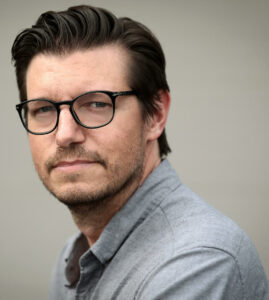 One of the joys of attending writing events is meeting other authors and getting to know their work. I first met Trace Conger at Imaginarium a few years ago. We swapped novels, and I immediately fell in love with his work. Below Trace talks about his latest novel and his approach to writing:
First off, congratulations on the release of your eighth novel, THE WICKED SIDE, the third book in your Connor Harding (Thriller) series. Can you share with our readers a bit about the book and what inspired the series? 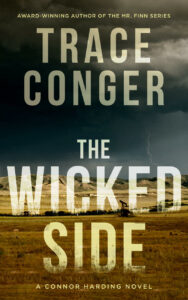
Thank you. THE WICKED SIDE is a vigilante justice thriller that follows Connor Harding, an ex-military investigator. He helps people—those who can’t go to the police—out of bad situations. In this novel, Connor is looking for Ellie Armstrong, a missing seventeen-year-old. His investigation takes him to Wyoming, where he has to find her before she’s trafficked out of the country.
As for inspiration, I spent some time in Wyoming a few years ago and fell in love with the landscape. The beauty and remoteness are awe-inspiring. I typically set novels in places I’ve been, and the isolation of Wyoming was a perfect fit for the story.
You’ve also written the Mr. Finn (PI) series, as well as stand-alone novels. Is the process different for you in writing series novels versus stand-alone works? How do you approach your main character’s growth and change in a series? 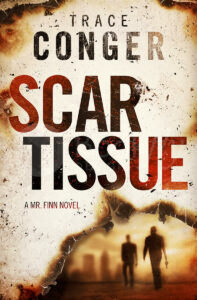
The process of outlining and developing the story is essentially the same for me whether I’m writing a series or a standalone. The big difference with a series is that I’m always thinking beyond the book I’m currently writing. I have to ask myself: What needs to happen in this novel, and what might it set up for the next one? At the same time, I have to keep track of what has already happened and make sure the characters and their circumstances remain consistent.
That continuity can sometimes involve small details. For example, Finn’s young daughter, Becca, appears in the Mr. Finn novels. I have to remember how old she is, what grade she’s in, and even whether she would be in school during the events of a particular book. Those details may seem minor, but they help make a series feel like a continuous world rather than three unrelated stories.
Character growth is where I think series writing gets particularly interesting. When we first meet Finn, he has lost his PI license and is forced to work for criminals—the kind of people who don’t care whether he’s licensed or not. On the surface, his goals are pretty straightforward: he wants to get his license back and repair his relationship with his ex-wife. 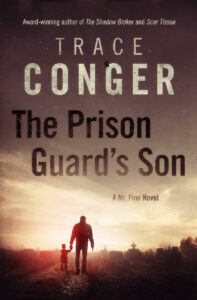
But as the series progresses, what Finn thinks he wants begins to change. The external goals remain important, but the deeper question becomes what kind of person he wants to be and what kind of life he actually wants. That gives me room to let the character evolve from book to book rather than simply giving him a new mystery to solve in each installment. 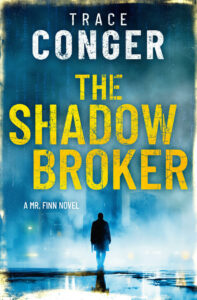
That’s one of the things I enjoy most about writing a series: the mystery may be different in every book, but the character carries the consequences of the previous stories with him.
You are known for the riveting suspense in your novels. What drew you to writing in the crime, thriller, and suspense genres?
It sounds cliché, but those are the stories I like to read. I like writing about criminals because, to me, they’re compelling characters, and I have a lot of leeway in what they do and the situations I put them in. I also like putting characters in terrible situations and seeing how they get out, which is easy to do in these genres. Sometimes, I like focusing on a whodunit puzzle, like FIVE WILL DIE, but other times, I like to throw characters in dangerous situations and see how they react, as in the Connor Harding series.
Did you always know that you wanted to write fiction? Were there particular authors whose work especially inspired you?
I don’t think I always knew I wanted to write fiction, but I’ve always loved stories. I grew up reading Stephen King, and his ability to create characters and situations that feel both familiar and unsettling had a big influence on me.
As a writer, my influences have evolved. I’m a huge fan of Lee Child’s Jack Reacher series, and the combination of action, mystery, and a larger-than-life protagonist was a major inspiration for my Connor Harding novels. I also love Joe Lansdale’s Hap and Leonard books. Lansdale’s blend of crime, humor, violence, and complicated relationships had a particularly strong influence on the Mr. Finn series.
I think the authors who influence me most are the ones who make me want to keep turning the pages, not just because I need to know what happens, but because I’ve become invested in the characters. That’s something I try to bring to my own books. 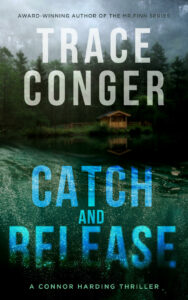
What is your writing process like? Are you more of a planner, a pantser, or somewhere in-between? 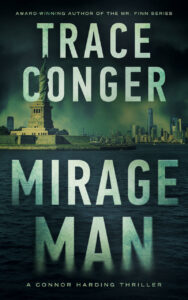
I started out as a pantser, but then I came to my senses! Now, I outline. Some might say I outline too much, but before I even begin writing, I typically have a 20-page detailed outline of the story. I like to have everything figured out before I start the first chapter. That makes the writing process so much easier for me. I always know what’s going to happen, so writer’s block is nonexistent. That’s not to say that the story doesn’t change. Often, the completed novel is about 80% true to the original outline, and I’ve even had situations where certain characters, who I thought would be killed off in the outline, survive in the novel. In FIVE WILL DIE, the killer actually changed from the outline to the novel, which even surprised me.
What has surprised you the most about becoming a professional writer?
I think most people believe being a writer is all about writing (I certainly did when I was younger). Sometimes the writing is the easy part. Then you throw in the marketing, the events, pitching to agents, reviewing contracts, research, and all the other stuff that comes with being an author. You can divide being an author into two sides—the craft side and the business side. You’ve got to focus on both if you want to be successful.
What steps did you take to develop your fiction writing skills? 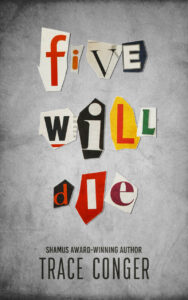
I studied creative writing at Ohio University, which gave me a foundation to build from. Early on in my career I also took courses and read books focused on fiction and story development. These definitely helped and they gave me confidence in the craft, but I think the most helpful skills are reading and writing. Writing is like building a muscle—you have to train it, to use it. You’re going to write a lot of crap, and that’s okay. The idea is to improve a little with every manuscript or short story. The other skill is to read (which should surprise no one). By reading what others are doing, it’ll help you learn what works and what doesn’t. And it will help you develop your own voice. It will also help you understand literary trends and reader expectations. If you’re writing something so far from the “norm” you may struggle to find an audience, but if you’re writing the same thing as everyone else, why should readers care? There is a fine balancing act there.
A related question: What advice would you give an aspiring mystery/thriller writer? 
I’d tell them to get out of the game; I don’t need the competition! Actually, I’d tell them to start now. Don’t wait. You need time. Time to develop, time to learn what works, time to fail. All of which will help you develop into a competent writer. Don’t be afraid of criticism. Don’t be afraid that someone is going to hate what you write. Some people will hate your work. If you don’t believe me, go to Amazon and look up how many 1-star ratings TO KILL A MOCKINGBIRD has. That’s arguably the best novel ever written, and still there are thousands of people who tear it apart. If readers hate that book, some are going to hate yours.
Also, write the story you want to read. You’ll be more passionate about the story, and that’s important because you’ll be spending a lot of time on it, and you better care about it. And finally, know when it’s time to abandon a project and move to the next one. If the story isn’t working and you’re struggling, it may be time to cut the line and move on to something else. You can always pick it up later. I spent a year working on a novel that I abandoned because it wasn’t working. I may go back to it later, but for now, it’s buried in a draw with my other secrets.
What’s next for you writing-wise?
I have a completed manuscript for a physiological thriller, LAST KNOWN ALIVE. I’m shopping it to literary agents now and I just sold the film rights. I’m adapting the manuscript into a screenplay, which will go into production next year.
I’m also working on the first in a new series following freelance criminal profiler, Maren Krueger, called THE BLUE-EYED MAN. She first appeared in FIVE WILL DIE, and now it’s time she gets her own series.
What haven’t I asked you that you wished I had, or would like to add?
I was at a conference and someone once asked me, “What’s the best piece of writing advice you’ve ever heard?” My answer to that question relates to self-doubt. At times, you’re going to hate your writing. You’re going to question why you’re doing it, why you’re potentially wasting your precious time writing something perhaps no one will read, and whether you should stop and give up.
You’re going to wonder if you’re fooling yourself and whether you have any talent at all. But here’s the kicker, self-doubt is always there. It never goes away. Someone once asked Stephen King when he stopped hearing the voice in his head that told him he was no good at this writing thing and that no one wanted to read his crap. His answer? “It’s still there. I just tell my inner voice to go fuck itself and I move on.”
That’s possibly the best piece of writing advice I’ve ever heard. Your inner critic will always be there, no matter how successful your become. When it starts speaking up and tries to crack your confidence, tell it to fuck off, and then get back to work.
Bio:
Trace Conger is an award-winning author in the crime, thriller, and suspense genres. He writes the Connor Harding (Thriller) series and the Mr. Finn (PI) series, among others. His Connor Harding series follows freelance “Mirage Man” Connor Harding as he solves problems for the world’s most dangerous criminals. The Mr. Finn series follows private investigator Finn Harding as he straddles the fine line between right and wrong. Conger won a Shamus Award for his debut novel, THE SHADOW BROKER. His novels, FIVE WILL DIE and LAST KNOWN ALIVE have been optioned for film and are in pre-production. Learn more about him at www.traceconger.com.
Purchase Links:
Mr. Finn Series:
Connor Harding Series:
Standalones:
Non-Amazon retail links are available at www.traceconger.com.
Great interview. That Trace guy seems like he knows what he’s doing. – Thanks, Lynn!
He really does! (smile)