Mining My Past, Especially the Painful Parts, for My Fiction
Years ago, I remember reading an anecdote in Writer’s Digest that had me laughing and nodding my head at the same time. A writer discovered that her dentist husband was having an affair with his office assistant. Her first thought? “Wow. This is material!”
I can relate. Not only do none of us get out of here alive, but when we are among the living, painful experiences are inevitable. Even when we decide we’re not going to dwell on them, or perhaps tell ourselves we’ve worked through them in therapy, they seep through our thoughts and feelings.
The good news is that they’re mighty handy for us fiction writers. I was reminded of this a few days ago when my oldest sister shared a draft of her memoir with me. We were seven years apart, and I was largely a peripheral figure in her life, other than my arrival being the apparent catalyst for losing her mother and having a miserable childhood. After our mother had given birth to two daughters, my father desperately wanted a son. Not only was he bitterly disappointed that I was a girl, but I was born with a hemangioma, a swollen, purplish non-malignant tumor above my lip which he mistakenly blamed on my mother’s car accident while pregnant with me. Parental fights became long and bitter, and our mother had a total breakdown. Diagnosed with paranoid schizophrenia, she ended up being institutionalized for the next ten years.
Our father, a workaholic, shipped us out to California for two years to live with our grandmother, a rather mean-spirited person unhappy with how her life had gone. My older sisters clung to one another and became very close. As for me, I was the outsider who’d messed everything up. It didn’t help that the housekeeper our father had hired doted on me and was unkind to my sisters.
As we grew up, my oldest sister was the shining star in our family, a beautiful young woman who became a National Merit scholar and graduated first in her class from Wellesley. My middle sister and I were no slouches, but we were definitely cast as the lesser offspring! In addition, my father didn’t approve of my passion for dance and wouldn’t allow me to take dance classes my senior year in high school or apply to a college with a dance major.
I share this because reading my sister’s memoir raked up all of those memories and painful feelings: my arrival as the cause of my sisters’ misery, survivor’s guilt that I didn’t experience losing a mother I was close to, that sense of being an outsider in my own family, not fully accepted for who I was or wanted to become—and of course, living in the shadow of a super star older sibling.
I don’t like thinking about what we went through as children, but I do have to say that it’s been very helpful to tap into those feelings and experiences in my fiction! As Elizabeth McCracken points out in A LONG GAME, NOTES ON WRITING FICTION, our autobiographies give us “a continuous source of material.” 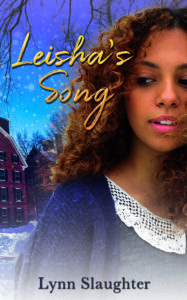
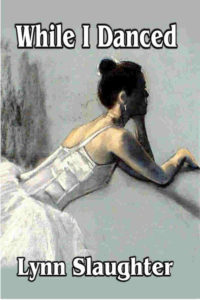
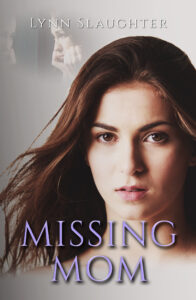
Both in WHILE I DANCED and LEISHA’S SONG, I drew upon my experience of having a parent who did not approve of my interest in the arts. Much like my dad, Leisha’s grandfather actively undermines her passion for music, refusing to allow her to participate in a vocal competition that might snag her a college scholarship. And in MISSING MOM, Noelle’s love interest Ravi copes with physician parents who would much rather he pursue a career like theirs rather than become a ballet dancer. 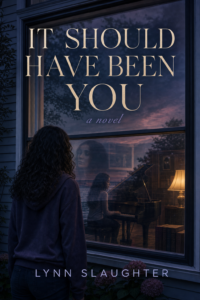
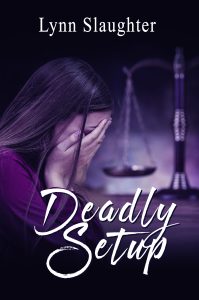
In IT SHOULD HAVE BEEN YOU, my protagonist Clara has grown up as basically an afterthought in her family with most of the attention allotted to her piano prodigy twin. And in DEADLY SETUP, my protagonist Sam tries in vain to get her mother’s attention and interest in listening to her.
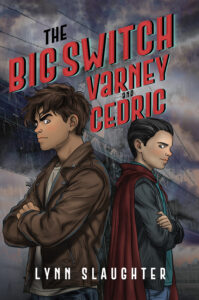
 I also drew on my experience of feeling like an outsider in my own family in evoking Varney’s feelings in my middle grade novel, THE BIG SWITCH: VARNEY AND CEDRIC. Varney’s a young vampire who hates the taste of blood and suffers from Vampire Adjustment Disorder. He loves his parents but feels as though he’s been a huge disappointment to them in his wish to be human rather than a vampire.
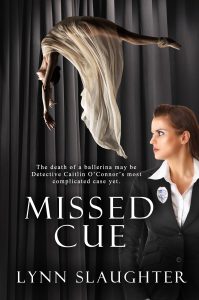
Even in my adult novels about homicide detective Caitlin O’Connor, MISSED CUE and DEATH IN THE END ZONE, echoes of my past appear. I idolized my father and modeled my work ethic after his. He had strong judgements and opinions that deeply affected me. Caitlin also idolized her late father whose pronouncements about how successful career women need to avoid marriage and family led her to make some unhealthy relationship choices. 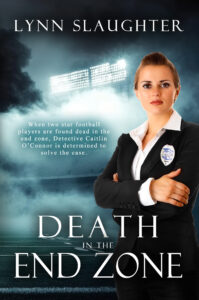
A more positive undercurrent also appears in my novels. Based on my own experience, I know that it is possible to move beyond negative childhood experiences and to embrace a rewarding life, bolstered by intentional families of love and support. That journey of growth, hope, and community is something I’ve celebrated in my novels.
I’ve yet to meet a person who had a perfect childhood, and if I did, they’d be awfully boring! For me, mining my imperfect past has been a blessing as a writer. I recommend it!
I found this to be a very thoughtful piece. I especially appreciated how you identified your issues as they showed up in your books. Having read all of them, I believe your direct knowledge allowed you to persuasively portray your protagonists as they dealt with the same issues. This gave your characters a ring of truth that deepened their complexity.
Thanks, Marty. I appreciate your very thoughtful comment, especially from someone who knows me well and has read my books! X0X
What a wonderful post, Lynn and great advice for other authors.
I had no idea you wrote a vampire novel. Cool.
Thanks so much, Carol! You never know when a vampire might sneak into our fiction!
Very insightful and I’m sure the emotions you’ve tapped into still resonate with kids today
Thanks, Nina. I sure hope so!
As one who is at the earlier stages of this writer-life, I find this post to be, above all else, generous. Thanks for your honest self-reflection. I believe my own writing, which, just as much as yours, I believe holds my past cloaked within it, will be bolder.
What a beautiful comment from a wonderful writer- thank you, Pam!
Fantastic post, Lynn! Even after all of the sharing of our life stories with each other during our daily commute to Harbinger Dance Company, I learned some new things about you!
“…when we are among the living, painful experiences are inevitable.” What a great line, and so true. It is a blessing that we authors can find meaning in those experiences by using them in our stories. And our readers often benefit as well as they relate to them.
Wonderful comment, Kass! Thank you.